Which Diet Is Best For Me?
Paleo, keto, vegetarian, low-carb, South Beach diet, Mediterranean, plant-based… all of the different diets and “lifestyles” can feel a bit overwhelming when trying to figure out what the best eating option is for you! Often times these eating lifestyles are presented as a one-size fits all magic bullet, but scientific research suggests that depending on the state of your autonomic nervous system, one way might be better than another.
Wait, what the heck is my autonomic nervous system?
I’m so glad you asked! The autonomic nervous system is the part of our nervous system that sends signals and operates without us consciously thinking about it. It supplies all of our internal organs and blood vessels! The autonomic nervous system is broken up into two main divisions, the sympathetic and the parasympathetic… starting to sound more familiar? You’re probably familiar with the term “fight or flight or freeze response”, this is the responsibility of the sympathetic nervous system. You’re probably also familiar with the term “rest and digest”, this is the responsibility of the parasympathetic nervous system.
Depending on factors such as the environment we grew up in and the current stressors we are facing (or not facing), sometimes we have a division of our autonomic (automatic) nervous system that is more dominant than the other and this can result in different characteristics and symptoms. People who tend towards “rest and digest” will typically be less active, have a low resting heart rate and respiration rate, good digestion and expression, and will have a tendency towards depression when experiencing emotional stress. People who tend towards “fight, flight, or freeze” will typically be highly active, high heart rate, high respiratory rate, poor digestion and expression, and will have a tendency towards anxiety when experiencing emotional stress. A dentist actually determined that typically someone who is predominantly parasympathetic will have a broad palate whereas predominantly sympathetic will have a narrow palate due to increased breathing efforts. Ideally we are wanting to reach a place where our sympathetic and parasympathetic systems are equally or near equally active.
Did Any of That Sound Familiar?
You most likely were able to get a pretty good idea of where your nervous system falls as you were reading through that list of characteristics. So now what does that mean for the type of eating that is ideal for the current state of your body?
According to research conducted by Dr. Nicholas Gonzalez and Dr. Linda Isaacs, in order to get someone in a sympathetically dominant state towards balance, they benefit from an alkaline diet and increased calcium [1]. An alkaline diet is going to be comprised of mostly plant-based foods, lots of water and cutting back on acidic foods like alcohol, sugar, meat and processed foods. In regards to calcium, it’s a common misconception that you can only get it from dairy; in fact some of the most calcium rich foods are not dairy at all! To increase your intake of calcium look to incorporate seeds (think poppy seeds, sesame seeds, and chia seeds), leafy greens (collard greens, kale, or spinach), rhubarb, edamame and figs. [2]
The research also found that in order to get someone from a parasympathetic-dominant state towards balanced, they benefit from an acidic diet and increased levels of magnesium and potassium [1]. An acidic diet would include higher amounts of meat, eggs, and grains while still looking to avoid alcohol, sugar and processed foods. To increase your intake of magnesium and potassium incorporate foods such as dark chocolate (milk does NOT count, you’re looking for 70-80% cacao or higher), avocados, nuts (almonds, cashews and Brazil are all full of magnesium), legumes, and grains such as quinoa or buckwheat. [3]
Once a person has reached a point of balance between sympathetic and parasympathetic they will have a good amount of flexibility in their diet while maintaining with supplements. Typically at this point a person is so in tune with their body that they are able to eat based on what their body is telling them. Some days they may crave red meat and other days they may eat primarily vegetables and this is all based on the state of their nervous system that day. Our bodies are incredibly adaptive and when in a healthy state, can actually give us a tremendous amount of insight into what we need.
How can I be sure of whether I’m in a state of sympathetic or parasympathetic dominance or balanced?
Seeking the guidance of a healthcare practitioner who is trained and experienced in nutrition and/or functional medicine is your best bet. Based on medical history, exam findings, and bloodwork they can get a good picture of how your body is operating and what would best support you in achieving a balanced nervous system. Dr. Nikki is able to help walk you through this process and/or help you find someone locally if you don’t live in the DFW area and don’t want to do an online consultation.
The next time a new diet comes out that is all the rage, just remember that while it may be great for some people, it may not be best for you! As always, we at Renew and Restore Wellness are here to help you be able to live your best life. If you have any questions, please don’t hesitate to give us a call or ask at your next appointment.
**Disclaimer** If you are experiencing specific health concerns, it is important that you consult with a healthcare professional before making any significant dietary changes.
Resources
1) (February 21, 2018). The science behind “different people, different diets”. Retrieved on July 1, 2020. https://goodfoods.coop/the-science-behind-different-people-different-diets/
2) (July 27, 2018). Top 15 Calcium Rich Foods (Many are non-dairy). Retrieved on July 2, 2020. https://www.healthline.com/nutrition/15-calcium-rich-foods#section8
3) (August 22, 2018). 10 Magnesium-Rich Foods That Are Super Healthy. Retrieved on July 2, 2020. https://www.healthline.com/nutrition/10-foods-high-in-magnesium#section7
Sharp Curve Ahead
”Wouldn’t it be nice if we had signs like that for life??” You know, signs that said “job loss ahead” or “cross-country move ahead” or even “illness ahead”. One of the biggest unexpected “sharp curves” that come up in life are health issues.
This afternoon, my co-pilot pup, Rocky, and I went out for walk along the Trinity Trail. As we strolled along, we came across a sign that said “Sharp Curve Ahead”. I found myself thinking
”Wouldn’t it be nice if we had signs like that for life??” You know, signs that said “job loss ahead” or “cross-country move ahead” or even “illness ahead”. One of the biggest unexpected “sharp curves” that come up in life are health issues. I wonder if we knew ahead of time that a specific disease was headed our way, we would live our lives a little differently? Often times, we spend the first half of our lives chasing wealth to then spend the second half of our lives chasing health.
The good news is that while we may not have a sign telling us what lies ahead in regards to our health, we can make decisions on a daily basis to prolong our years with a healthier life! Here are five basics that we can all implement right away. While they may seem simple, I find myself needing reminders on all of these at some point throughout a given day, week or month.
1) Get sleep! Sleep is imperative for our brain and body to heal. It also greatly impacts our immune function and cognitive ability. 7 - 8 hours of sleep per night is a great goal!
2) Hydrate! Our bodies are over 55% water and we use it in every single cell, organ and tissue. It is essential for the regulation of all bodily functions. Aim for 50% of your body weight in ounces of water per day!
3) Taste the Rainbow! Getting a variety of fruits and veggies in our diet is essential. By including a “rainbow” of colors in produce on our plate, we are increasing the amount and variety of vitamins and minerals that we are consuming.
4) Stay Active! Maybe crushing a workout at the gym isn’t your thing, that’s ok! Whether it’s going for a 20 minute walk, going for a bike ride, taking the stairs, trying a pilates or barre class or simply letting loose and dancing, movement is the key!
5) Find Your Tribe! As humans, we were created to be social. I know some of the introverts may be cringing right now, but it’s true! Make sure you have one or two people who you can bounce things off of and just do life with! It doesn’t need to be a quest for popularity, just a few people to hold one another accountable and lift each other up in times of need.
While I didn’t include chiropractic care in the 5 basic tips, regular chiropractic adjustments are extremely beneficial in maintaining proper function of the spine and nervous system. Since this is what allows our brain to talk to our body and our body to talk to our brain, it’s kind of important! To schedule your next appointment with Dr. Nikki, click here and if you have any questions about any of the other tips for staying healthy, we would love to hear from you!
What Is Strength? A Chiropractor’s Perspective on Health
So let me ask you, what moments or decisions exemplified strength for you this year? For me, in 2017, strength looked like a lot of pressing into the discomfort of making difficult decisions, asking (what felt like) stupid questions, having uncomfortable conversations, trying new things, facing fears and remaining steady when everything about my circumstances felt unsteady. As I reflected back through all of these experiences, there was one common factor… that strength didn’t come from me.
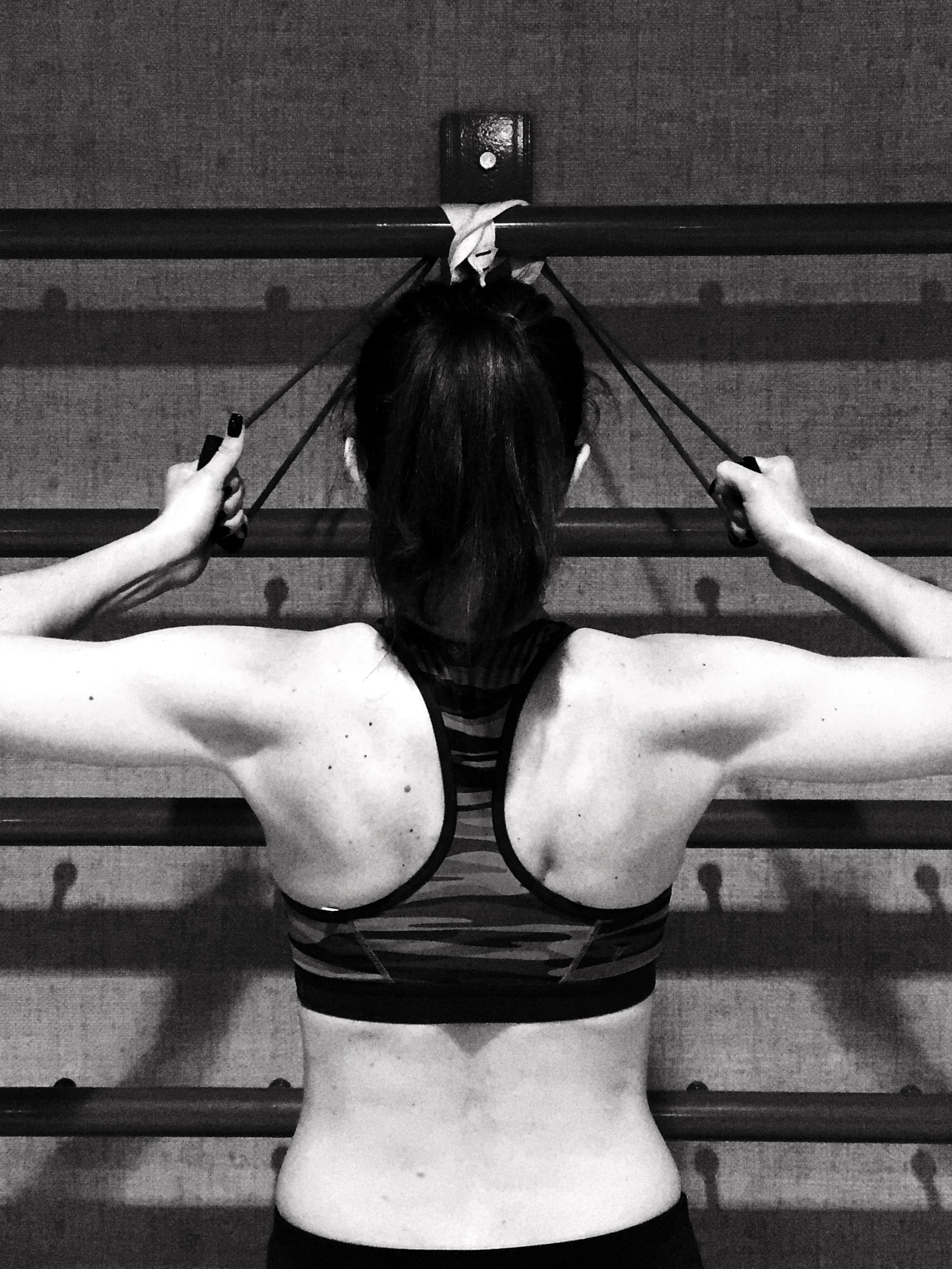
Photo by CB
I recently accepted a challenge to get into better shape with one of my closest friends. About a week into our new workout routine, she snapped a picture of me doing a cable face pull exercise. Honestly, I didn’t feel very strong that day. But when I saw the image, one word stood out immediately: strength.
As a chiropractor, I couldn’t help but notice something else, the activation of my back muscles, specifically the extensor muscles that support posture and spinal health. In today’s world of desk jobs, phones, and constant screen time, these muscles are often weak and underused. So seeing them engaged was a small but meaningful win.
Pro tip: Exercises like rows and face pulls are excellent for improving posture, strengthening your back, and supporting chiropractic care.
Why Strength Matters for Spinal Health
When most people think of strength, they think of lifting weights or building muscle. But from a chiropractic perspective, strength is also about stability, alignment, and proper muscle function.
Strong back and core muscles:
Support proper posture
Reduce strain on the spine
Help prevent injuries
Improve overall mobility and function
If you’re dealing with back pain, neck tension, or poor posture, improving muscular strength, especially in the posterior chain, can make a significant difference.
What Is Strength, Really?
Strength isn’t just physical.
According to Webster’s dictionary, strength can refer to:
Physical power
Mental resilience
Emotional endurance
The ability to withstand stress
And in real life, strength often shows up outside the gym.
Everyday Examples of Strength
Some of the strongest moments in life look like:
Making difficult decisions
Asking questions when you feel unsure
Having uncomfortable conversations
Trying something new
Facing fears
Staying steady during uncertain seasons
Through all of these experiences, I’ve realized something important:
True strength doesn’t come from us alone.
Finding Strength in Weakness
It’s easy to feel strong when everything is going well. But real growth happens when we’re stretched beyond our comfort zone.
In 2 Corinthians 12:9–10, we’re reminded:
“My grace is sufficient for you, for my power is made perfect in weakness… for when I am weak, then I am strong.”
This is where strength takes on a deeper meaning.
It becomes less about control and more about trust, humility, and growth.
How to Build Strength in Your Daily Life
If you want to improve your strength in a well-rounded way, physically and mentally, start with small, consistent steps:
Incorporate strength training into your routine
Focus on posture and spinal alignment
Add pulling exercises like rows and face pulls
Stay consistent, even when motivation is low
Step outside your comfort zone regularly
Address discomfort instead of avoiding it
If needed, working with a chiropractor can also help identify muscle imbalances and support your overall movement and recovery.
A New Perspective on Strength
Strength isn’t just about how much you can lift.
It’s about:
Showing up when things feel hard
Taking care of your body
Being willing to grow
Trusting the process
Whether you’re working on your fitness, improving your posture, or navigating life’s challenges, strength is built in those moments where you choose to keep going.
Final Thoughts
My hope for you is that this season challenges you in the best way.
Try the workout.
Start the conversation.
Take the trip.
Do the thing that feels uncomfortable.
Because that’s where growth happens.
That’s where strength is built.
And that’s where transformation begins.
Looking to improve your posture or relieve back pain? Schedule an appointment with our chiropractic team at Renew & Restore Wellness today.